From application requirements to a series-ready battery
Our integrated engineering team turns application constraints into a custom lithium battery architecture, then supports prototyping, validation and the transition to production.
Your application sets the starting point
We do not begin with a catalogue. We study the equipment, its duty cycle and real operating constraints to define a battery consistent with the required runtime, power, integration, safety and production volume.
Prepare the first discussionApplication and use
Equipment, mission, operating time, charging frequency and required availability.
Energy and runtime
Voltage, capacity, usable energy and target runtime under real conditions.
Power and charging
Continuous current, power peaks, charging time and the associated charger.
Mechanical integration
Dimensions, weight, mounting, enclosure, wiring, connectors and accessibility.
Operating environment
Temperature, vibration, humidity, exposure and the required protection level.
System and production
BMS, communication, applicable requirements, expected volumes and target schedule.
- Since 2013
- Lithium-ion battery development and manufacturing expertise
- Monteux
- Engineering team and factory based in France
- ISO 9001
- Certified company since 2021
- 100 MWh
- Annual production capacity
One continuous path from engineering to series production
A project manager coordinates the relevant disciplines and keeps technical decisions, validation and industrial objectives aligned.
The stages adapt to the maturity, risks and specific requirements of each application.
Request a project review- Step 1
Frame the requirements
We start with the equipment and its real operating profile before selecting a technology or architecture.
- Duty cycle and expected runtime
- Voltage, power and charging strategy
- Available space, environment and volumes
A shared technical baseline, an initial feasibility assessment and a clear set of next decisions.
- Step 2
Define the battery architecture
Cells, electrical configuration, mechanics and thermal behaviour are considered as parts of the same system.
- Cell selection and series-parallel configuration
- Usable energy, power and charging behaviour
- Enclosure, connections and equipment integration
A proposed architecture aligned with the project's technical and industrial constraints.
- Step 3
Engineer the BMS and electronics
The management system protects the cells, measures battery status and can exchange data with the equipment.
- Electrical protection and safety thresholds
- Measurement, balancing and thermal management
- Data reporting and communication where required
A management strategy consistent with the architecture, performance targets and intended use.
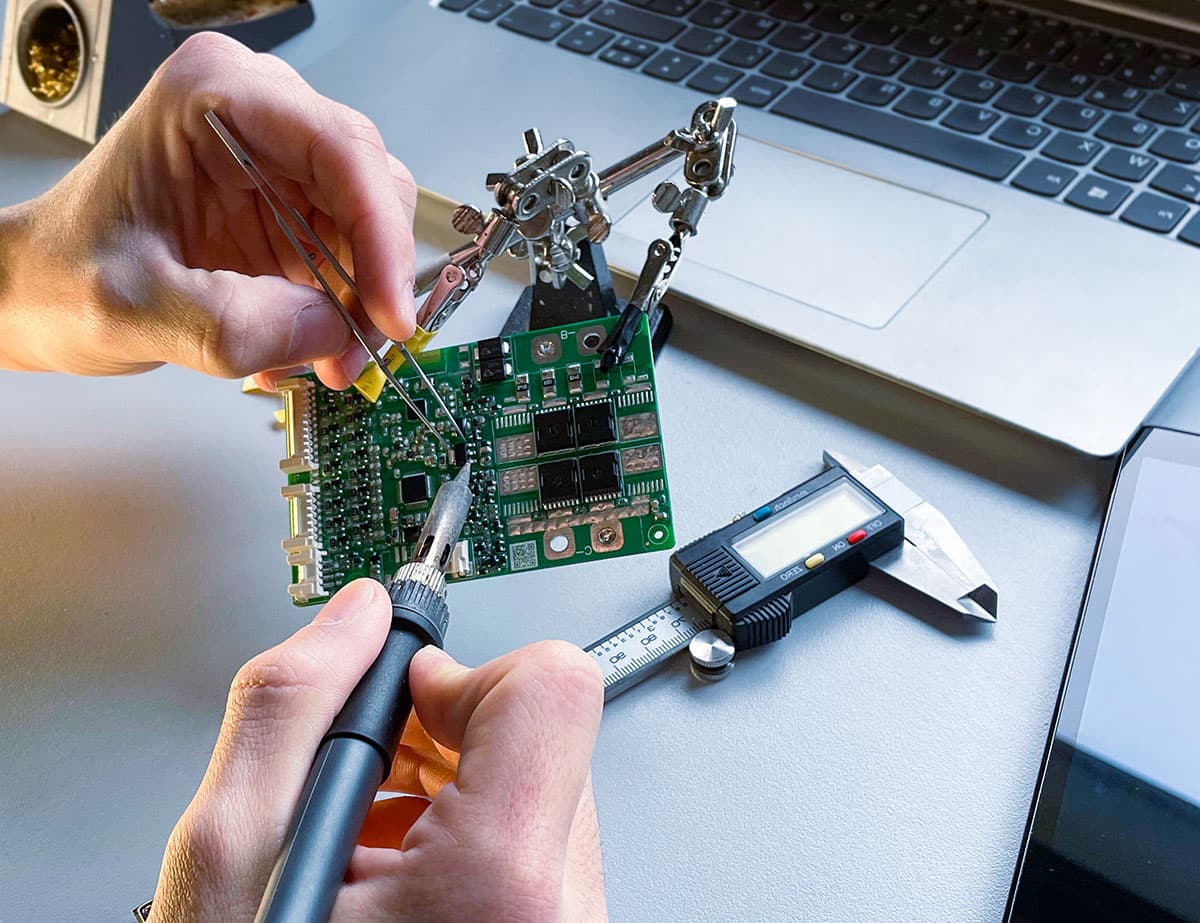
Electronic development and inspection of a BMS board by the engineering team. - Step 4
Prototype and integrate
The prototype tests engineering choices against the available space, interfaces and operation of the final equipment.
- Mechanical or 3D design depending on the project
- Assembly, wiring and connectors
- Initial tests and customer validation
A checked prototype and a clear record of any adjustments required before moving forward.
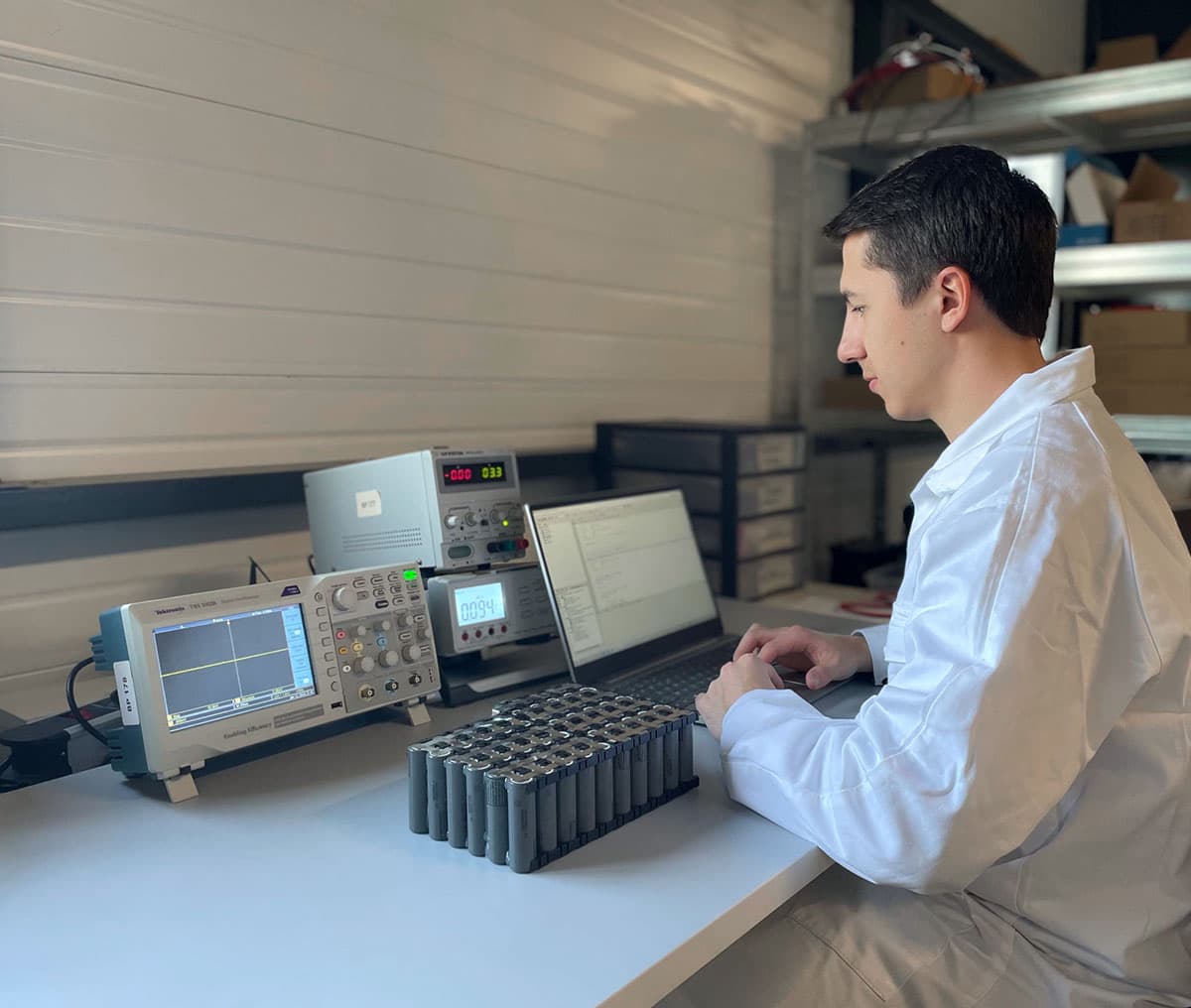
Checking a cell assembly during the prototyping stage. - Step 5
Test and prepare compliance
Checks are selected according to the risks, intended use and requirements that apply to the project.
- Charge, discharge, runtime and power
- Thermal behaviour, BMS and safety
- Preparation for required tests or certification
Test evidence and a reasoned decision before industrialisation.
- Step 6
Industrialise and manufacture
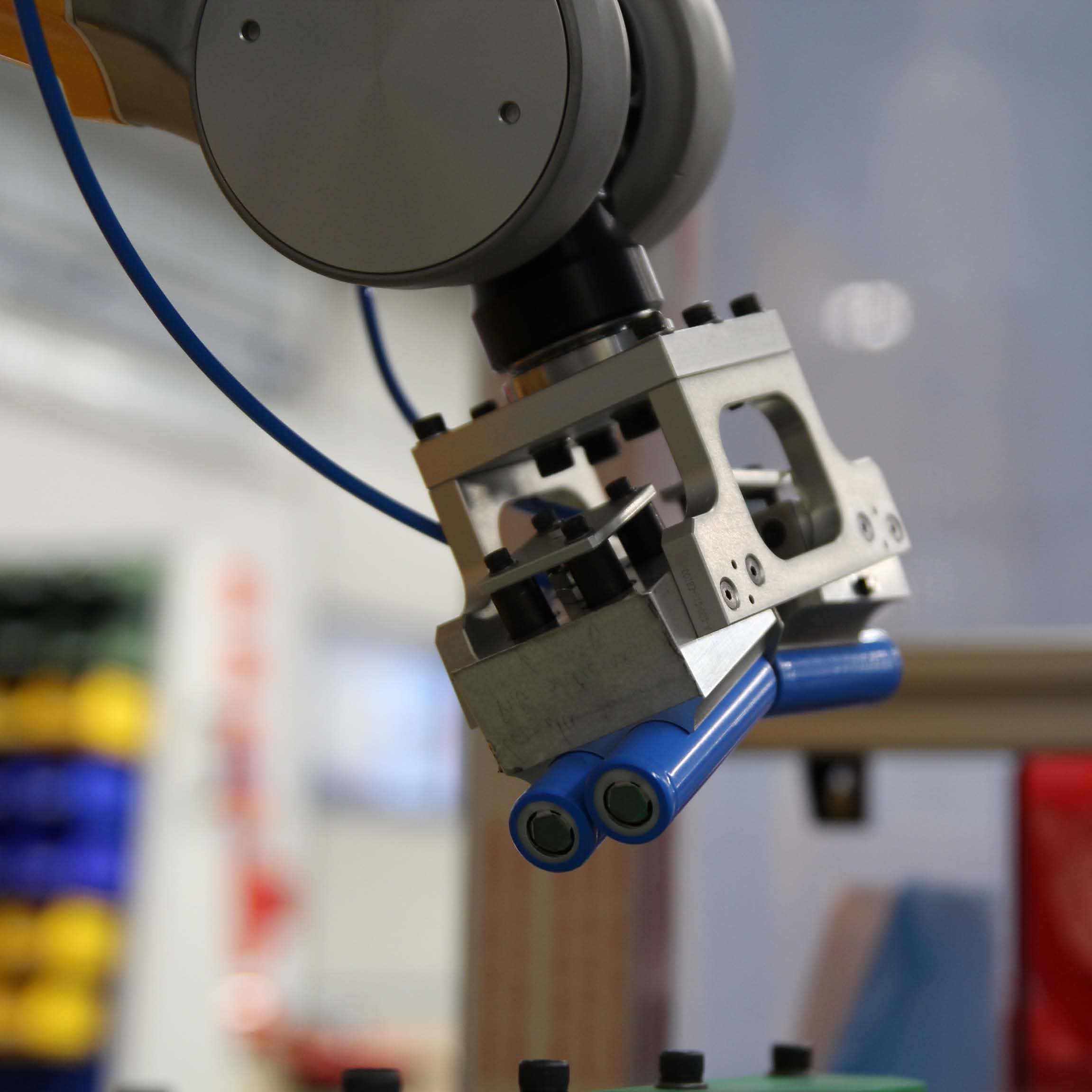
The approved solution is translated into production data, methods and controls so it can be repeated consistently.
- Production file and assembly methods
- Traceability and end-of-line controls
- Manufacturing in France and long-term support
A battery prepared for controlled series production at the Monteux factory.
One team to balance the complete battery system
Pack performance never depends on a single component. The engineering team coordinates the choices that must work together and prepares their transfer to manufacturing.
Cells and electrical architecture
Technology, configuration, voltage, capacity, power and charging strategy.
Mechanical and thermal integration
Packaging, retention, enclosure, wiring, connectors and temperature management.
BMS, electronics and software
Protection, measurement, balancing, diagnostics and communication with the equipment.
Safety, quality and compliance
Risk analysis, control planning, documentation and preparation for applicable validation.
Industrialisation and manufacturing
Repeatable choices, assembly methods, traceability and series-production controls.
Deliverables matched to project maturity
Engineering makes decisions understandable and usable so the solution can be validated, integrated and prepared for manufacturing.
The exact scope and deliverables are agreed during project framing. Not every project requires the same documents or level of validation.
Technical framing
Formalised requirements, input data, priority constraints and open points to resolve.
Solution architecture
Electrical, mechanical, thermal and electronic choices for the agreed scope.
Prototype and integration
Prototype, interfaces and adjustments required before the design is frozen.
Validation evidence
Test results and documents available according to the checks performed and project needs.
Industrialisation file
Data, methods and control planning needed for repeatable manufacturing.
Engineered in Monteux and prepared for repeatable manufacturing
Close coordination between engineering, quality and production brings manufacturing constraints into the design decisions from the outset.
- Engineering, prototyping, manufacturing and control within the same organisation
- Automated lines supporting the transition to series production
- End-of-line controls and traceability suited to professional projects
- Technical continuity between engineering decisions and factory execution

Validate before freezing the series design
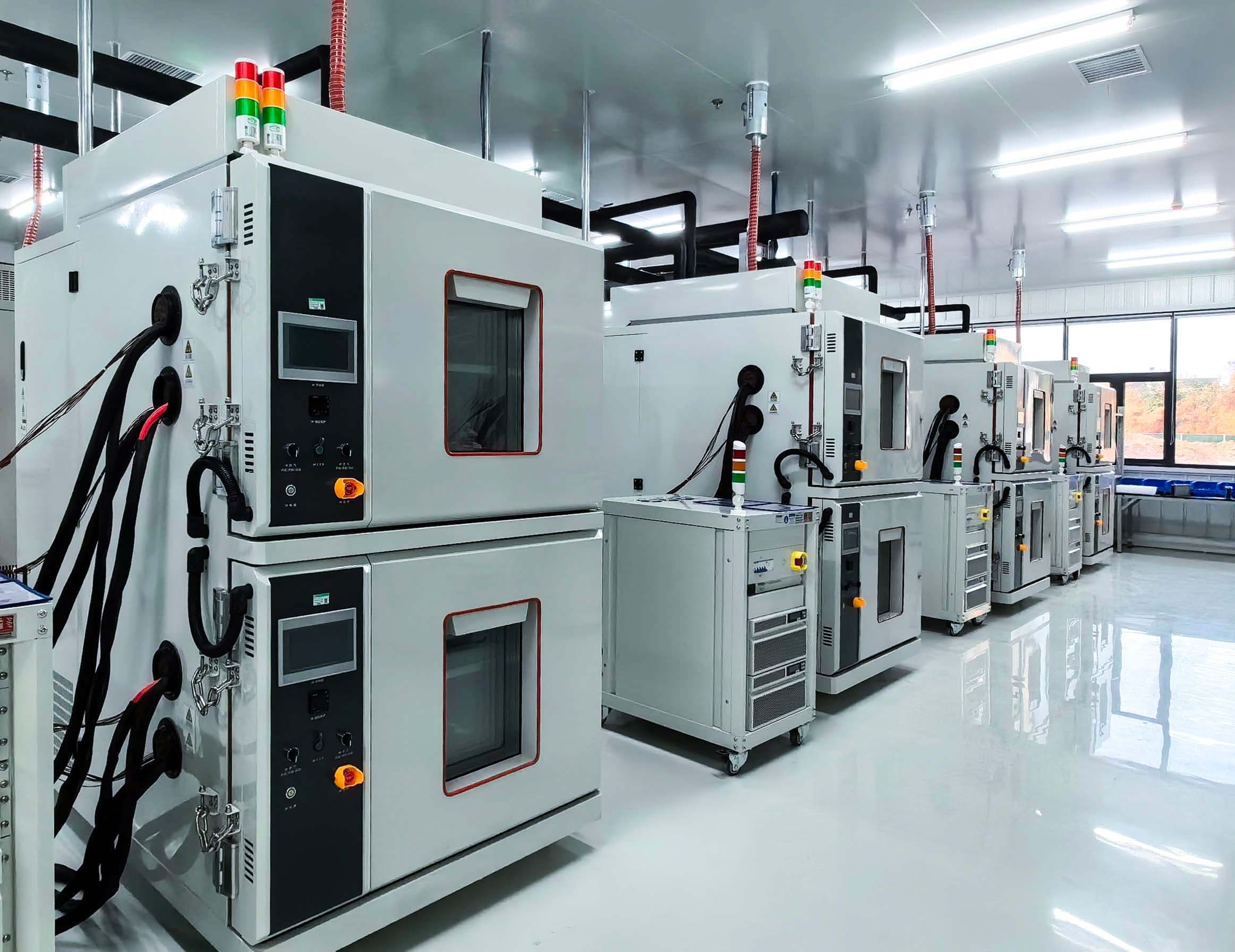
Our teams perform functional and safety checks suited to the project to assess pack behaviour under representative conditions.
Energy and power
Charge, discharge, runtime and response to current peaks.
BMS and protection
Thresholds, balancing, fault response and battery data reporting.
Thermal and environmental behaviour
Pack behaviour under the expected temperatures and operating constraints.
Interfaces and integration
Connectors, wiring, charger and operation with the final equipment.
Where normative testing or certification is required, Batteries Prod prepares the solution and supports the process with the relevant standard and organisation.
View testing and certificationPrepare your battery project
Answers to the questions most often raised before an initial engineering review.
What information is needed to begin a project review?
The application, duty cycle, target runtime, voltage or power, available space, operating environment, connections and expected quantities provide a useful starting point. If some data is missing, the first discussion helps identify it.
Can you develop the BMS and communication with our equipment?
Batteries Prod can engineer a BMS and electronic boards for the project. Functions, protection and communication protocols are defined according to the battery architecture and equipment requirements.
How does a prototype move into series production?
The prototype is used to verify battery integration and behaviour. Once the required adjustments and validation are complete, technical data, manufacturing methods and controls are prepared for repeatable production.
What battery tests are performed?
Checks depend on the application and project maturity. They may cover charge, discharge, power, runtime, BMS behaviour, temperature, connections and overall pack operation.
Does Batteries Prod support certification?
Batteries Prod helps identify applicable requirements, prepare the pack technically and organise the necessary validation. Normative testing and certification are then carried out to the applicable standard with the competent organisation.
How long does a custom battery project take?
Timing depends on requirement maturity, architecture complexity, the number of iterations, testing and compliance needs. Initial framing establishes the next stages and a schedule suited to the project.
Let us discuss the constraints that will shape your project
A few details are enough to start the discussion: application, target runtime, voltage or power, available space, environment and expected volume.
Your enquiry is qualified and directed to the right contact.