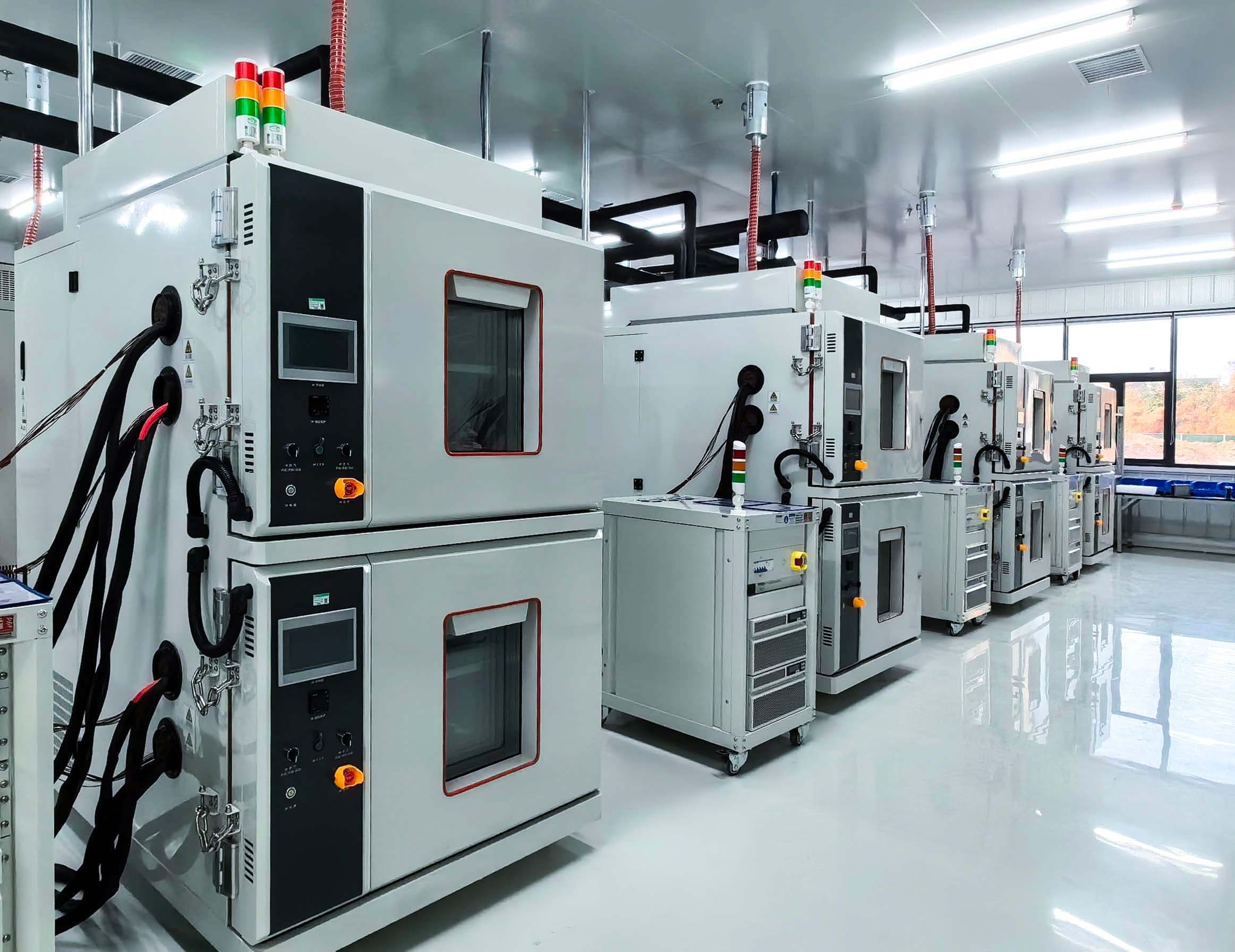
Lithium battery test benches

Lithium battery expertise for demanding industrial applications

Test and validate your lithium battery packs to make them safer before field integration

A lithium battery is a strategic component in professional equipment. It directly affects runtime, available power, safety, service life, mechanical integration, electronic communication and the overall reliability of the system.

Batteries Prod supports industrial companies, equipment manufacturers, engineering teams and integrators in the technical analysis of their battery projects: pack architecture, cell selection, BMS, protection, charge and discharge behaviour, thermal constraints, connectors, mechanical integration, testing and validation.

Our objective is simple: to help you design a reliable battery solution that matches real-world use and remains serviceable over time.

01 — Expertise

Technical expertise for your lithium batteries

A battery project involves more than defining voltage and capacity. The pack must suit the final equipment, usage profile, charging cycles, peak currents, environment, mechanical constraints and safety requirements.

Batteries Prod addresses the critical aspects of a lithium battery project: electrical safety, pack stability, BMS selection, protection, balancing, thermal behaviour, connectors, mechanical integration, functional testing and validation before field use.

This approach reduces the risks of incompatibility, incorrect sizing, integration defects and premature failure.

02 — Two areas of expertise

Two areas of expertise that secure your battery project

Batteries Prod structures its support around two major concerns: lithium safety and technical validation of the battery pack.

These two dimensions are complementary. A battery must be correctly designed, protected, tested and validated before it is integrated into professional equipment.

Lithium safety

Lithium battery safety depends on many parameters: cell selection, series/parallel configuration, BMS, charge and discharge protection, balancing, fuses, wiring, connectors, enclosure, insulation, thermal dissipation and operating conditions.

Batteries Prod analyses the risks associated with actual battery-pack use to define a coherent, stable architecture suited to your application.

  • Analysis of risks associated with use
  • Cell selection and pack architecture
  • BMS and electrical protection
  • Thermal management
  • Charge and discharge safety
  • Mechanical integration and connectors

Testing & validation

Before integration into equipment, a battery must be tested under conditions representative of real-world use: runtime, discharge current, charging behaviour, heating, electronic communication, safety cut-outs, connectors and compatibility with the final system.

Batteries Prod performs checks and validation to improve battery-pack reliability before prototyping, series production or field operation.

  • Charge and discharge tests
  • Runtime and power verification
  • BMS inspection
  • Connector and wiring inspection
  • Thermal validation
  • Functional validation with the equipment

03 — Critical risks

An incorrectly sized battery can compromise the entire machine

In a professional application, an inadequately engineered lithium battery can cause cut-outs, insufficient runtime, overheating, accelerated ageing, communication faults, charger incompatibility or difficult mechanical integration.

In the most critical cases, poor design or insufficient protection can create a risk of excessive heating, short circuit or even fire.

This is why Batteries Prod analyses the battery as part of the complete system rather than as an isolated component.

  1. Insufficient runtime

    Theoretical capacity alone is not enough. Actual runtime depends on the consumption profile, peak currents, temperature, system efficiency and operating mode. Batteries Prod considers the required runtime and field conditions to propose a battery consistent with the real need.

  2. Incorrect power rating

    Some equipment requires high or repeated peak currents. The pack must deliver this power without unintended BMS cut-outs or excessive heating. Our engineers study the charge and discharge currents required by the application. We select the cells, BMS, wiring and protection according to the power actually required by the equipment to prevent cut-outs, performance losses and abnormal heating.

  3. Complex mechanical integration

    Pack format, enclosure, mountings, cable exits, connectors, gauge and available space must be studied from the design stage to avoid last-minute modifications.

    Batteries Prod designs the battery around the space available in the equipment. We consider dimensions, connector positions, cable routing, mountings, enclosure and accessibility to facilitate mechanical integration from the earliest project stages.

  4. Electrical safety

    Batteries Prod incorporates the protection required for correct pack operation: an appropriate BMS and protection against overcharge, deep discharge, overcurrent, short circuits and abnormal temperatures. We also pay close attention to wiring, insulation, connectors and assembly quality.

  5. Fire risk

    A poorly protected or incorrectly sized lithium battery, or one used under unsuitable conditions, can present a risk of excessive heating, short circuit or fire. Cell selection, BMS, protection, wiring, insulation and enclosure are therefore essential to secure the complete pack. Sensitive points are analysed from the design stage to limit overheating, electrical faults and misuse.

  6. Thermal management

    Temperature affects pack safety, performance and service life. Charging, discharging and environmental conditions must be considered from the design stage.

  7. Battery testing

    A pack may operate correctly on a test bench yet reveal limitations once integrated into the equipment. Testing must therefore reproduce actual operating conditions as closely as possible. Before integration or series production, Batteries Prod performs checks and validation covering charge, discharge, runtime, BMS operation, thermal behaviour, connectors, wiring and overall operation. Where required, the prototype is exposed to the equipment's real constraints so the solution can be adjusted before industrialisation.

A battery pack must be validated under conditions close to real-world use

A battery may appear compliant based on its technical specifications yet fail to meet actual field constraints.

The most common problems are insufficient runtime, cut-outs during current peaks, excessive heating, communication faults with the equipment, unsuitable connectors, incorrect BMS behaviour and charger incompatibility.

Testing verifies that the battery operates correctly under the intended conditions: charging, discharging, power demand, environment, mechanical integration and electrical safety.

At Batteries Prod, validation is not limited to checking voltage. It confirms that the battery pack is genuinely suited to the final equipment.

04 — What we inspect

The key points inspected on your lithium batteries

Every battery project has its own constraints. Batteries Prod adapts its checks to the application, technology, pack architecture, BMS, required currents, environment and expected level of performance.

  1. Charge tests

    The charging phase is essential for checking the behaviour of the battery pack, BMS and charger. Unsuitable charging can cause cut-outs, faults, premature ageing or safety risks.

    What Batteries Prod does

    Batteries Prod checks battery behaviour during charging: voltage, current, end of charge, cell balance, BMS response and compatibility with the charger intended for the application.

  2. Discharge tests

    Discharge testing verifies the pack's actual ability to power the equipment over time. It reveals available runtime, voltage stability and pack behaviour under load.

    What Batteries Prod does

    Batteries Prod performs discharge tests to check the energy actually available, pack stability, BMS behaviour and consistency between the stated capacity and intended use.

  3. Runtime validation

    Actual runtime depends on the usage profile, peak currents, temperature, system efficiency, cell ageing and how the equipment draws power from the battery.

    What Batteries Prod does

    Batteries Prod analyses the equipment's runtime requirements and checks that the battery pack is correctly sized for the actual duty cycle: operating time, charging frequency, required power and safety margin.

  4. Power and peak currents

    Some professional equipment requires high currents during start-up, under load or over repeated cycles. If the pack is incorrectly sized, the BMS may cut out or the battery may overheat.

    What Batteries Prod does

    Batteries Prod checks the pack's ability to deliver the required currents, taking the cells, BMS, wiring, connectors and electrical protection into account.

  5. BMS inspection

    The BMS is central to the safety and operation of a lithium battery. It protects the cells and manages critical thresholds: overcharge, deep discharge, overcurrent, short circuit, temperature and balancing.

    What Batteries Prod does

    Batteries Prod checks BMS behaviour, protection thresholds, charge and discharge response, cell balancing and, depending on the project, the information reported to the equipment.

  6. Thermal behaviour

    Temperature directly affects the safety, performance and service life of a lithium battery. A poorly ventilated, heavily loaded or incorrectly integrated battery may experience excessive heating.

    What Batteries Prod does

    Batteries Prod checks pack thermal behaviour for the intended use: discharge current, operating time, environment, enclosure, available ventilation and mechanical integration constraints.

  7. Connectors, wiring and integration

    A battery may be technically functional yet difficult to integrate if its connectors, cable exits, mountings or dimensions do not suit the final equipment.

    What Batteries Prod does

    Batteries Prod checks the consistency of connectors, wiring, cable lengths and sections, output positions, insulation and mechanical integration within the equipment.

  8. Communication and monitoring

    Some battery packs must communicate with the equipment: state of charge, state of health, voltage, current, temperature, faults, cycles or operating information.

    What Batteries Prod does

    Batteries Prod checks electronic communication requirements for the project: data reporting, system compatibility, BMS logic, monitoring and information useful for operation.

05 — Certifications

Technical validation that improves lithium battery reliability

Tests performed by Batteries Prod verify the operation, technical consistency and integration of a lithium battery pack within its application.

These checks do not replace regulatory or standards certification by an accredited laboratory where one is required. They do, however, help prepare a more robust project before certification, customer validation or production.

Batteries Prod can support the technical preparation of the pack to reduce the risk of failure, incompatibility and late-stage modifications.

Have my application constraints reviewed

06 — Our method

An analysis method centred on real-world use

Each battery is studied according to its operating environment, load level, integration constraints and the expectations of the manufacturer or operator.

  1. Requirement analysis

    We begin by understanding your application: equipment type, expected operating time, required power, charging frequency, environment, mechanical constraints and operating constraints.

  2. Technical framework

    We define the pack's key data: voltage, capacity, usable energy, charge current, discharge current, connectors, weight, dimensions, any communication requirements and expected safety level.

  3. Battery architecture

    We build the pack architecture: cell technology, series/parallel configuration, BMS, protection, wiring, enclosure, connectors and integration strategy.

  4. Safety and protection

    We review the critical points: overcharge, deep discharge, overcurrent, short circuit, temperature, balancing, insulation, connectors and BMS behaviour.

  5. Testing and validation

    The pack is inspected and tested to verify its behaviour during charging, discharging, power demand and temperature changes under conditions as close as possible to final use.

  6. Integration preparation

    Once validated, the battery can be integrated into your equipment with a clear architecture, documented technical choices and a repeatable production process.

Test and validate your lithium battery packs to make them safer before field integration

Lithium Battery Expertise | Safety, Testing & Validation - Batteries Prod